


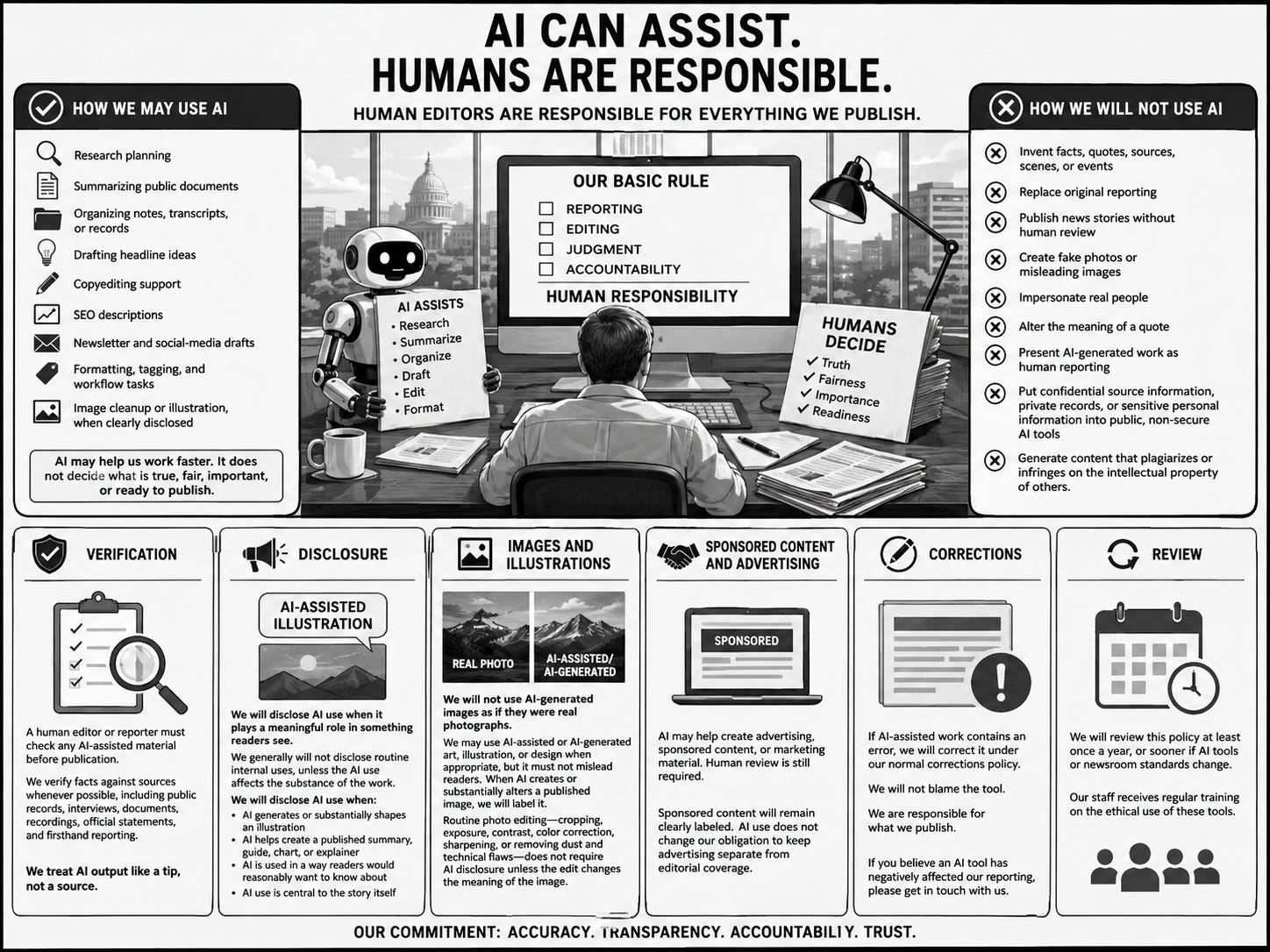
We use artificial intelligence carefully. We do not use it to replace reporting, editing, judgment, or accountability.
Our basic rule is simple: human editors are responsible for everything we publish.
How we may use AI
We may use AI tools to help with:
Research planning
Summarizing public documents
Organizing notes, transcripts, or records
Drafting headline ideas
Copyediting support
SEO descriptions
Newsletter and social-media drafts
Formatting, tagging, and workflow tasks
Image cleanup or illustration, when clearly disclosed
AI may help us work faster. It does not decide what is true, fair, important, or ready to publish.
How we will not use AI
We will not use AI to:
Invent facts, quotes, sources, scenes, or events
Replace original reporting
Publish news stories without human review
Create fake photos or misleading images
Impersonate real people
Alter the meaning of a quote
Present AI-generated work as human reporting
Put confidential source information, private records, or sensitive personal information into public, non-secure AI tools
Generate content that plagiarizes or infringes on the intellectual property of others.
Verification
A human editor or reporter must check any AI-assisted material before publication.
We verify facts against sources whenever possible, including public records, interviews, documents, recordings, official statements, and firsthand reporting.
We treat AI output like a tip, not a source.
Disclosure
We will disclose AI use when it plays a meaningful role in something readers see.
We generally will not disclose routine internal uses, such as grammar checks, headline brainstorming, transcription cleanup, or formatting help, unless the AI use affects the substance of the work.
We will disclose AI use when:
AI generates or substantially shapes an illustration (e.g., creating the core concept of an image)
AI helps create a published summary, guide, chart, or explainer
AI is used in a way readers would reasonably want to know about
AI use is central to the story itself
Images and illustrations
We will not use AI-generated images as if they were real photographs.
We may use AI-assisted or AI-generated art, illustration, or design when appropriate, but it must not mislead readers. When AI creates or substantially alters a published image, we will label it.
Routine photo editing — cropping, exposure, contrast, color correction, sharpening, or removing dust and technical flaws — does not require AI disclosure unless the edit changes the meaning of the image.
Sponsored content and advertising
AI may help create advertising, sponsored content, or marketing material. Human review is still required.
Sponsored content will remain clearly labeled. AI use does not change our obligation to keep advertising separate from editorial coverage.
Corrections
If AI-assisted work contains an error, we will correct it under our normal corrections policy. We will not blame the tool. We are responsible for what we publish. If you believe an AI tool has negatively affected our reporting, please get in touch with us.
Review
We will review this policy at least once a year, or sooner if AI tools or newsroom standards change. Our staff receives regular training on the ethical use of these tools.