


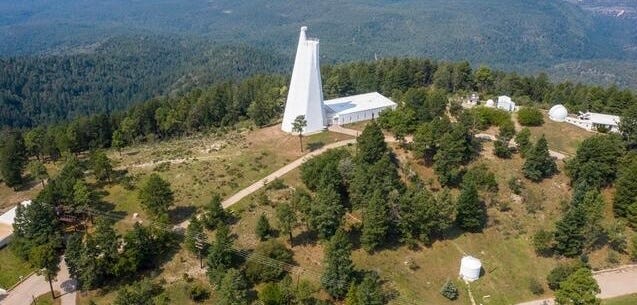
The National Science Foundation is pressing ahead with plans to demolish the Sunspot Observatory campus in the Sacramento Mountains following a January mercury spill, and a coalition of former staff and community members is calling for a pause.
Dave Dooling, a former education officer for the National Solar Observatory who worked at Sunspot from 2002 to 2012, is the spokesman for the Friends of Sunspot, an informal coalition of former staff, residents, and observatory supporters formed in response to the demolition announcement.
The group is still organizing, with plans to approach local commissions and, eventually, state and federal legislators.
At a recent Cloudcroft village council meeting, Dooling and Heidi Sanchez, who oversees education and public engagement for the observatory, addressed the council during public comment, asking for support in opposing the demolition.
“Just because the telescope isn’t operational doesn’t mean the rest of the site’s still not viable,” Sanchez said. “To spend all that money to demolish everything – our tax dollars could be used better than that.”
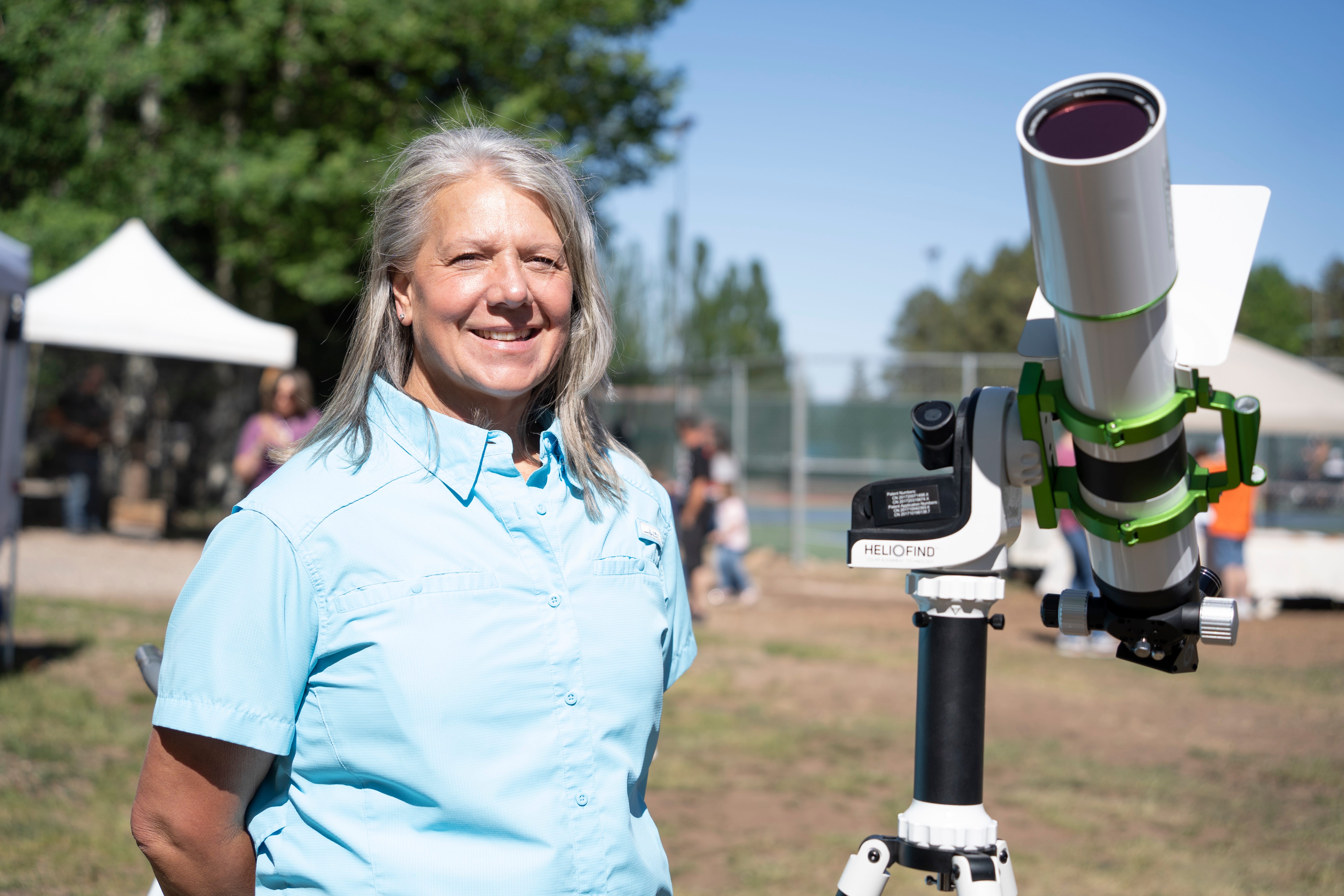
Sanchez, who said she was speaking for herself and not on behalf of NMSU, explained that the scope of what would be lost extends well beyond the telescope itself. The campus includes a fire station, post office, dormitories, housing, visitor center with a museum and gift shop, and of course, the people who live and work there.
“The people who work here are now out of a job, and they’re having to go look elsewhere for employment … you have people who live here,” she said. “We get tourism from around the world, and so those people that would come to New Mexico that have astronomy interests or science interests would no longer be drawn to this area.”
Sanchez said she understands the mercury removal must go forward, but full demolition beyond that would be a major loss for tourism and for the scientific training of students who choose to study in New Mexico.
“Most people are very upset, but they think the decision has already been made and there’s nothing they can do about it. And so that’s why I’m trying to be vocal, because I want people to push back on that decision,” she said. “Tearing [the site] down and not seeing that tower there, I think it’s going to leave a void in a lot of people.”
By Sanchez’s count, the Sunspot Visitor Center draws an average of 12,500 people a year and reaches more than 2,150 students through roughly 60 school and youth groups. The site’s structured outreach programs connect with more than 3,400 people annually and partner with organizations across the region, including White Sands National Park and Holloman Air Force Base.
Sanchez said that despite the current state of things, she hasn’t lost hope and would like to see community pushback lead to the National Science Foundation halting demolition plans.
“If people get vocal, speak up, and join efforts to rally together, we can potentially stop what’s happening,” she said. “There’s got to be a path forward for Sunspot in preserving this important scientific and cultural landmark for future generations to enjoy. Because once you start decommissioning, there’s no way to go back in time and fix things.”
What Happened
The Richard B. Dunn Solar Telescope has stood above the Sacramento Mountains for more than 50 years, producing solar research and training generations of scientists.
On Jan. 5, a liquid mercury leak surfaced inside the Dunn Solar Telescope at the Sacramento Peak Observatory in Sunspot. Eleven days later, a crack was found at the weld between a mercury valve and the bottom of the telescope’s bearing.
On Feb. 24, NSF made its broader intentions official with the announcement that it would move forward with full demolition and site restoration of not just the Dunn Solar Telescope, but the entire Sacramento Peak Observatory campus, including residential and support buildings.
According to internal documents, hazardous materials experts had removed approximately 186 pounds of mercury from platforms inside the telescope as of Jan. 15. In March, NSF awarded a sole-source emergency contract to the structural engineering firm Thornton Tomasetti to lead structural stabilization and full mercury removal.
“No Immediate Need to Demolish”
While the NSF appears firm in its decision, Dooling argues that more should be done to try to save the Dunn Solar Telescope and the surrounding facilities.
“Give us a couple of years at least,” Dooling said. “There’s no immediate need to demolish it and make it disappear.”
Dooling calls the demolition decision premature and points to the McMath-Pierce Solar Telescope in Arizona — an old scientific facility converted into an education center — as a model for Sunspot.
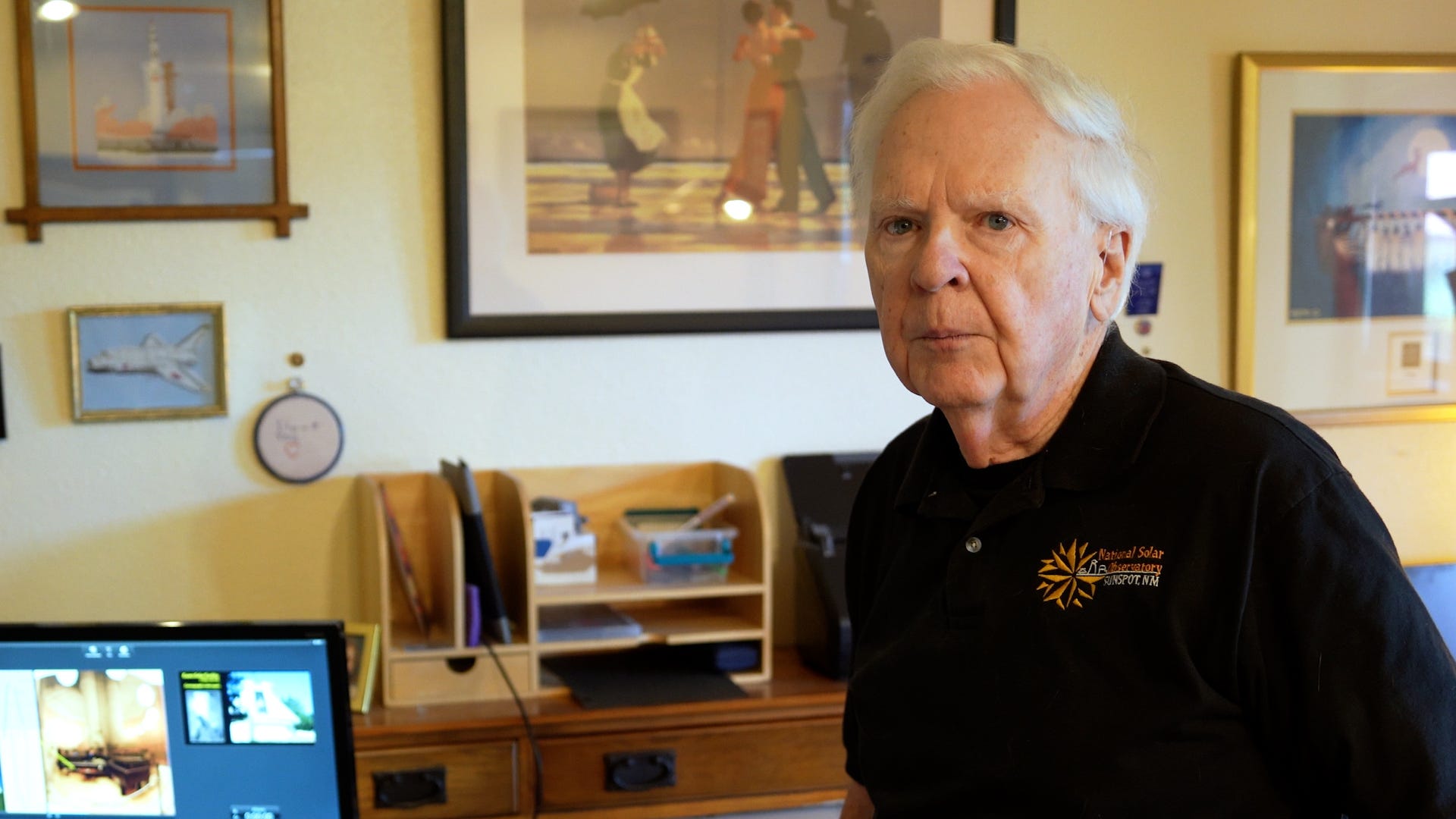
His vision, which he calls a “Sunspot Science Park,” would include an RV park for amateur astronomers, a science camp for students, and the reactivation of smaller telescopes on the site.
He also contends that the Dunn itself could be rehabilitated, either using a liquid metal alloy called Galinstan as a mercury-free bearing replacement or using rotating mirrors to get the telescope operating again.
“These would be great graduate study projects to figure out which would be the best way to rehabilitate that telescope and bring it back into operation,” Dooling said. “At minimum, it could be preserved and used as a museum with hands-on science exhibits, teaching how the sun works, how we study it, and how optics and light work.”
Demolition itself faces a lengthy regulatory process, including seasonal restrictions to protect the Mexican Spotted owl, biological surveys, geophysical assessments for karst features, and multiple environmental compliance permits. Dooling said that the process alone could buy the observatory time.
If demolition proceeds, the land would return to Lincoln National Forest management. In an email, a Forest Service spokesperson said staff are already thinking about what comes next.
“As the permit holder and the agency responsible for the facility, NSF is the lead decision-maker. NSF determined the appropriate scope of remediation, selected the cleanup method, and made the final decision regarding demolition as part of its mercury remediation contract,” the spokesperson said.
“Forest Service staff have begun internally discussing the future of this land and how it best serves the community. While no decisions can be made at this time, ideas have included establishing a recreation site, a campground, or even an interpretive location. These ideas are only conceptual and are far from implementation.”
Considering Costs
Dooling acknowledged that the odds are long, particularly given the upheaval across federal agencies and a proposed White House budget that would cut NSF’s operational funding roughly in half. But he is not ready to concede.
“Estimates on the cost of demolition 20 years ago, and this is an internal estimate at Sunspot in one of their annual reports, the cost of remediation would be anywhere from $7 to $30 million, which means today it would be on the order of $10 to $45 million when you factor in inflation,” Dooling said. “It would be more cost-effective for them to just let us sit there for a couple of years while we get some funding put together, get an organization put together that can pick up and run with it.”
A 2018 Environmental Impact Statement commissioned by the NSF put the cost of demolition at $14.1 million in 2015 dollars, far above the $2.2 million the NSF was contributing annually to keep the observatory running as of 2016.
Dooling argued Sunspot is well-suited to serve as an educational tool for future generations and that the site is needed to continue advancing humanity’s understanding of the sun.
“Our ability to forecast space weather is about as good as our ability to forecast the weather on TV back in the 1960s,” he said. “We need to do much better, because society is so technically fragile.”
Discover Cloudcroft:
Elevate Your Visit

Cloudcroft Reader is proud to be sponsored in part by great companies like:
Cloudcroft Art Society
Located in Old Red Brick Schoolhouse: Holiday and Saturday art showsNoisy Water Winery
Family-owned winery crafting thoughtfully made wines from New Mexico grapes, inspired by mountain living.Be in the Mountains Yoga & Massage
A cozy space for yoga and massage therapy at the Village PlazaOsha Trail Depot
Your destination for unique, hand-crafted treasuresThe Stove and Spa Store
We offer a variety of services to ensure your hearth and spa dreams are met!The Lodge at Cloudcroft
Landmark Choice Among New Mexico ResortsCloudcroft Art Workshops
Enhance your artistry while enjoying the beauty and coolness of the mountains!Sacramento Camp & Conference Center
Come to the Mountain — Let God Refresh Your SoulLaughing Leaf Dispensary
Discover a world of wellness at Laughing LeafInstant Karma
Adventure Within: Transformative Yoga, Ayurvedic Wisdom, Nourishing Organics, Fair Trade BoutiqueOff the Beaten Path
Eclectic gifts & original artworkFuture Real Estate
Raise your expectations.Ski Cloudcroft
The Southernmost ski area in New Mexico.Cloudcroft Therapeutic Massage
Maximizing Movement, Quality of Life ImprovementHigh Altitude
Your favorite little outdoor outfitter on Burro AvenueBlushing Yucca Esthetics
✨ Book your glow-up today✨The Elk Shed
Purveyors of Southwest + Mountain Provisions, Goods & FineryThe PAC
Pickleball Addicts of Cloudcroft—Pickleball in the CloudsPeñasco Valley Telephone Cooperative
For all the ways you love to connectBre Hope Media
Professional photo and video services

Thanks for the reporting Jonny, and to both Dave and the NMSU employees whom are educating the public about this. With the closure of the area in January, for a single contaminated building, a big opportunity has been lost for the public, and interested parties (government officials, municipalities, etc.) to both visit and rally for solutions, instead of total demolition.
Hopefully the NSF changes its mind-the tourism/educational potential certainly exists. As for the Mercury spill-induced demolition plan, this would be like burning down your house to get rid of bedbugs. It sounds like the powers that be have been wanting to shut this site down for awhile and now have the excuse they need.